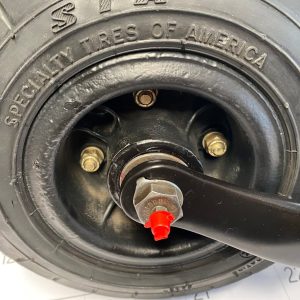
The Scott 3200A Tailwheel – Fully Rebuilt combines an established aviation design with inspected, serviced, adjusted, and replaced components intended to restore dependable mechanical operation. A fully rebuilt description should identify which bearings, bushings, springs, steering components, seals, fasteners, wheel parts, and wear items were replaced or retained.
A correctly rebuilt Scott 3200A Tailwheel Assembly can support predictable steering when installed and adjusted properly on a compatible aircraft. The Scott Tailwheel Assembly may contain bearings, bushings, springs, steering pawls, arms, wheel components, axle hardware, fasteners, and internal wear surfaces.
A worn or incorrectly configured Aircraft Tailwheel Assembly can contribute to shimmy, poor tracking, binding, excessive swivel, uneven tire wear, or difficult maneuvering. The General Aviation Tailwheel should receive maintenance based on actual use, operating surface, contamination exposure, and observed condition.
Whether the requirement is an Aircraft Tailwheel, Taildragger Tailwheel, Aviation Tailwheel System, or Tailwheel Steering Assembly, exact compatibility should guide the purchase.
Key Benefits of a Rebuilt Scott 3200A
The Scott 3200A combines mechanical steering and swivel functions in a design familiar to many tailwheel pilots, restorers, and aviation maintenance professionals. A system-level evaluation can identify the true cause of binding, looseness, poor centering, irregular tire wear, or inconsistent ground control.
Maintaining a Scott 3200A Tailwheel Assembly
Actual operation depends on the complete aircraft installation rather than the tailwheel assembly alone. Detailed documentation gives buyers a stronger basis for comparing available Scott 3200A Tailwheel Assemblies.
Scott Tailwheel Reliability and Condition
The rebuilder should evaluate corrosion, cracking, bearing condition, spring strength, steering engagement, axle wear, bushing clearance, and fastener serviceability. Cosmetic refinishing should remain secondary to mechanical condition and structural integrity.
Aircraft Tailwheel Assembly Benefits
Tailwheel condition influences taxi tracking, turning ability, maneuverability, and pilot workload. Weak, broken, or mismatched steering springs may reduce directional response or create irregular control.
General Aviation Tailwheel Reliability
Maintenance intervals should reflect actual operating conditions rather than calendar time alone. Experimental aircraft installations should be evaluated according to the builder’s configuration and applicable operational requirements.
Maintaining an Aircraft Tailwheel
Its geometry, tire condition, fork alignment, steering arrangement, and internal condition can influence ground behavior. The axle and bearings should be included in routine maintenance and rebuild inspection.
Taildragger Ground Handling
Mechanical wear, poor alignment, or unsuitable steering adjustment can increase pilot workload. Responsible operation can extend Taildragger Tailwheel service life.
Aviation Tailwheel System Inspection
An Aviation Tailwheel System includes the tailwheel assembly, tail spring, steering chains or links, steering springs, mounting hardware, surrounding structure, and its relationship with the rudder controls. Springs should remain free from distortion, corrosion, cracking, broken coils, or unsuitable substitution.
Choosing a Tailwheel Steering Assembly
Wear in these components may create looseness, poor tracking, inconsistent engagement, or delayed control. Correct clearance prevents binding and unnecessary mechanical loading.
Maintaining Aircraft Ground Handling Components
An Aircraft Ground Handling Tailwheel supports controlled movement during taxi, parking, towing, hangar positioning, and ramp maneuvering. Towing should use appropriate equipment and procedures that avoid overloading steering arms, chains, springs, forks, or mounting structures.
Scott 3200 Tailwheel Applications
A professionally rebuilt Scott 3200A can continue this design heritage while offering renewed mechanical condition. A visually similar tailwheel may contain important differences affecting installation or operation.
Choosing a Heavy-Duty Aircraft Tailwheel
Professional review remains necessary before fitting a Heavy-Duty Aircraft Tailwheel. Aircraft operating regularly from unimproved strips may require more frequent servicing.
Choosing Tailwheel Aircraft Parts
Tailwheel Aircraft Parts may include wheels, tires, bearings, axles, forks, steering arms, springs, pawls, bushings, seals, chains, bolts, and mounting hardware. The rebuild should examine all interacting parts rather than focusing on external appearance.
Aircraft Steering Tailwheel Performance
Alignment and steering-link condition influence how accurately the wheel follows pilot input. Uneven tire wear may indicate alignment, bearing, or steering concerns.
Benefits of a Replacement Aircraft Tailwheel
The removed assembly can provide useful measurements, markings, hardware details, and steering-arm orientation. Qualified personnel should verify condition, completeness, and installation suitability.
Choosing General Aviation Landing Gear Parts
Main-wheel alignment, brake condition, tire pressure, and airframe rigging can influence how a taildragger behaves on the ground. The product description should explain whether components are rebuilt, repaired, serviced, inspected, untested, or sold for parts.
Inspecting a Fully Rebuilt Scott 3200A
A detailed inspection reduces uncertainty and supports a more informed transaction.
- Determine whether the sale includes the tire, wheel, axle, bearings, steering springs, chains, mounting bolts, fittings, and rebuild records.
- Inspect the assembly for cracks, corrosion, bending, damaged threads, enlarged holes, fork distortion, tire wear, rough rotation, and excessive looseness.
- Require packaging that protects the wheel, fork, steering arms, mounting surfaces, fittings, and loose hardware from impact and movement.
Scott Tailwheel Fitment and Adjustment
Installation should be completed by appropriately qualified personnel familiar with conventional-gear aircraft and mechanical tailwheel steering systems. The steering linkage should respond properly without restricting rudder movement.
Controlled taxi testing may help confirm steering response, centering, ground tracking, brake interaction, and shimmy resistance.
Maintaining the Scott 3200A Tailwheel
Long-term maintenance includes lubrication, tire inspection, bearing review, steering-link checks, cleaning, fastener inspection, spring evaluation, and monitoring of ground-handling performance. Pilots should inspect the tailwheel before operation for tire damage, loose hardware, bent parts, steering-link condition, contamination, corrosion, and visible misalignment.
Hardware and moving areas should remain visible enough for inspection.
Buying a Fully Rebuilt Scott Tailwheel
When professionally inspected, installed, adjusted, tested, and maintained, the Scott 3200A Tailwheel – Fully Rebuilt can become a reliable component of a compatible conventional-gear aircraft. Buyers should request detailed photographs, rebuild records, accurate condition disclosures, secure transaction terms, qualified review, and protective shipping.
Whether operators are sourcing an Aircraft Steering Tailwheel, Replacement Aircraft Tailwheel, or General Aviation Landing Aircraft Ground Handling Tailwheel Gear Parts, complete condition information supports informed decisions. With transparent rebuild records, secure mounting, serviceable steering components, and careful taxi testing, the Scott 3200A can support predictable ground handling.